Business and transformation priorities start getting expensive when the organization has to compensate for what the plan assumed would already exist.
Complex contexts. Consistent patterns.
space

You keep solving the same business problem in different forms
You see the issue. You act on it. You invest in it. And somehow, it shows up again somewhere else.
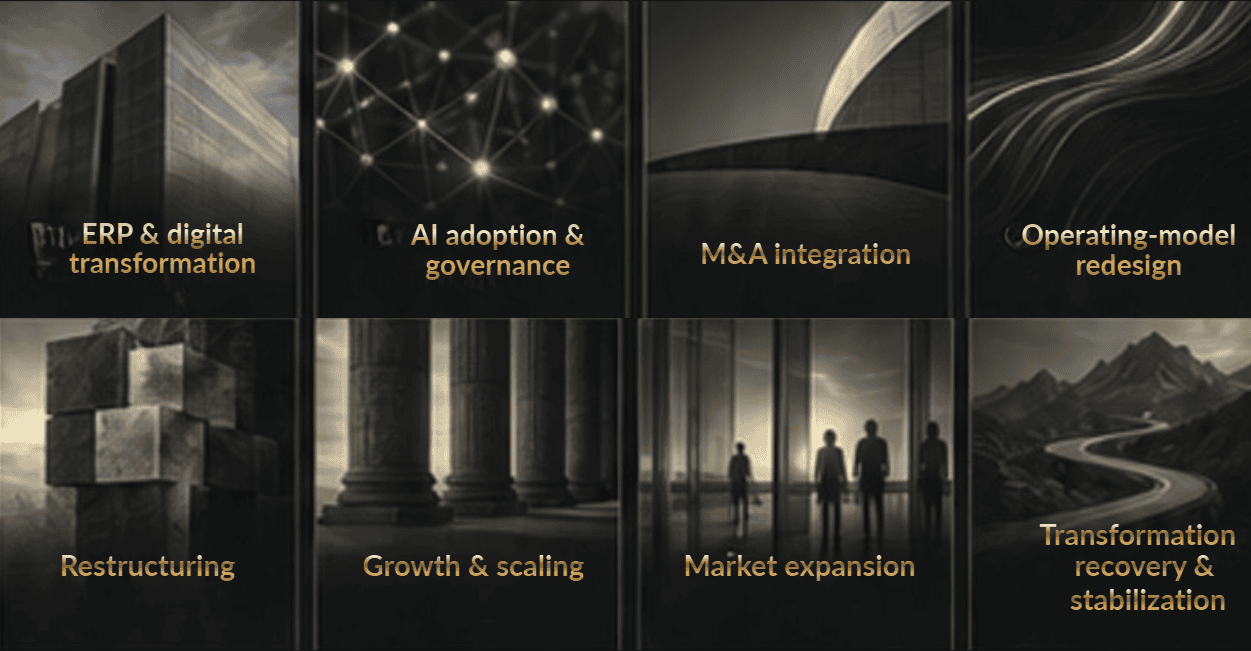
As the business launches, grows, scales, restructures or expands, the visible problem may sit in strategy, structure, governance, technology or people while the real constraint sits somewhere else.
You spend time, attention and money treating what is visible without changing what keeps reproducing it.
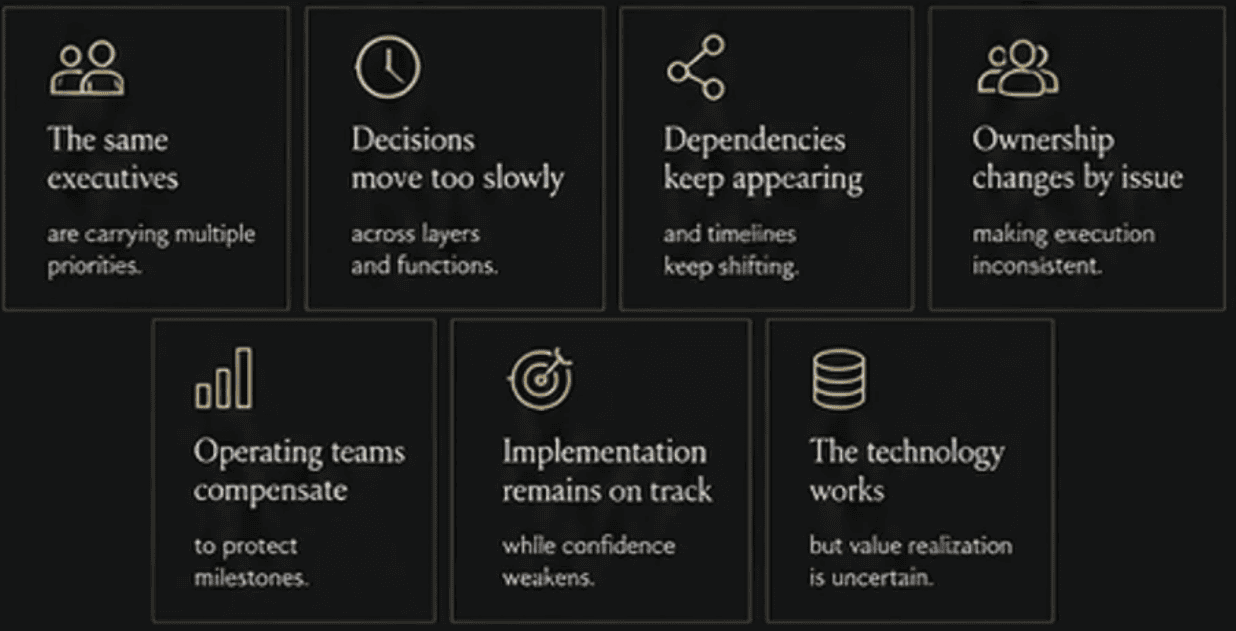
Your transformation is progressing on paper, but the organization is carrying it differently in practice.
Plans, governance and dashboards can show progress while delivery increasingly depends on informal ownership, workarounds, overloaded middle managers, hidden dependencies and capacity that was assumed rather than available.
When operating reality begins to diverge from the transformation design, risk, cost and delivery burden move into places the programme does not always see.
The transformation keeps moving, but what it depends on to keep moving becomes increasingly fragile.
Your delivery depends on client-side conditions you do not control
Your solution can be technically sound and your delivery team can be doing exactly what it was engaged to do, yet progress still slows because decisions stall, ownership is unclear, dependencies multiply or the client organization cannot absorb what is being implemented.
Your team starts compensating for conditions outside its intended mandate.
That creates rework, timeline pressure, scope strain and margin risk around a problem the technology alone cannot solve.
Different exposure. Same question: what must be true for the intended outcome to hold in practice?
We see what others miss.
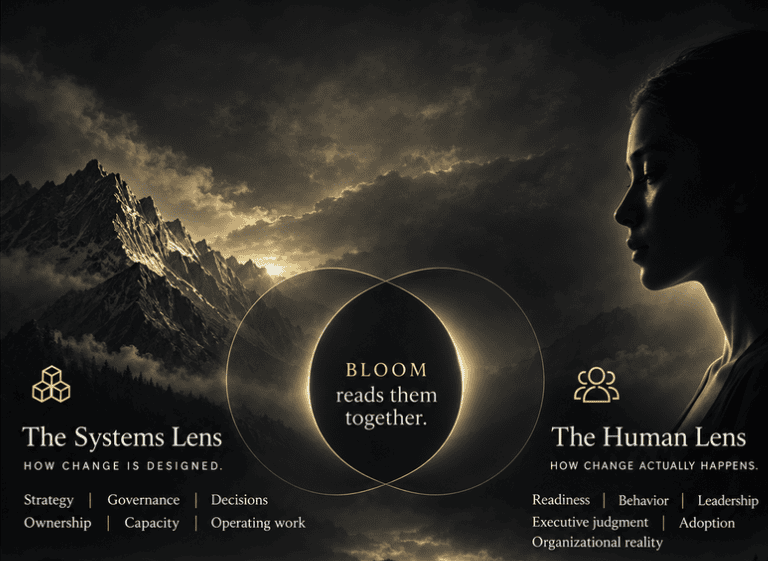
Together, these lenses make visible where business and transformation assumptions diverge from operating reality.
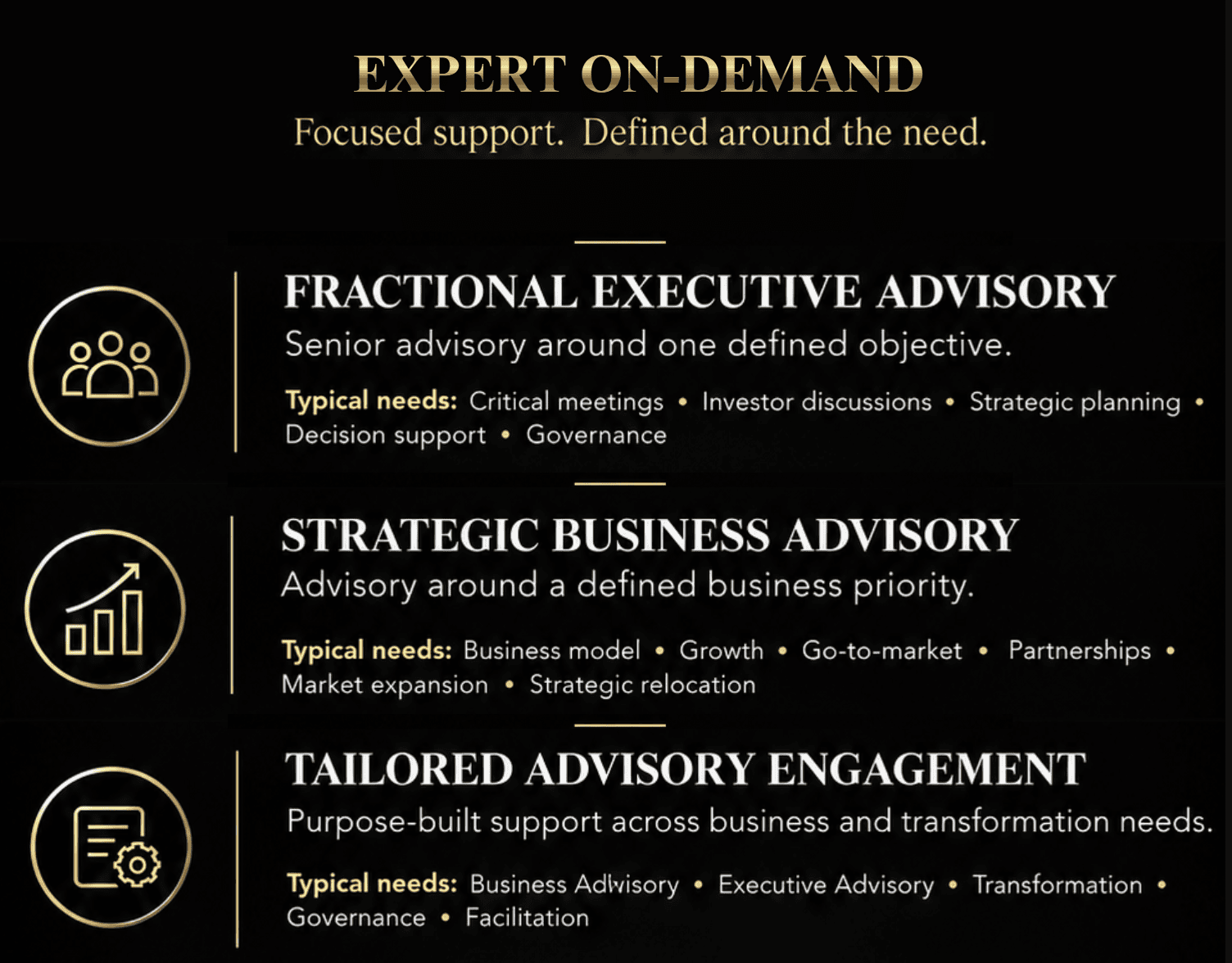
One integrated lens. Two ways to work with us.
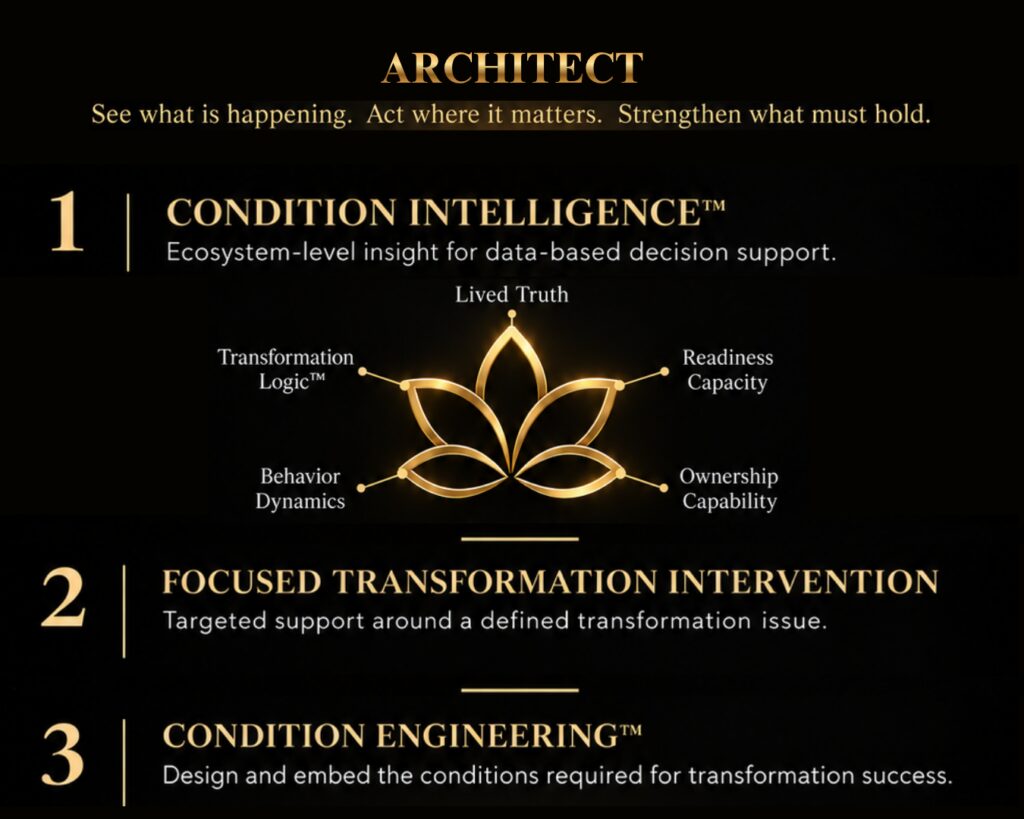
BLOOM reads the system and the people carrying it together to make visible where ownership, authority, capacity, dependencies and operating reality differ from what the business or transformation assumes.
That is where we find what needs attention before the organization, or its delivery partners, are forced to compensate for it.